
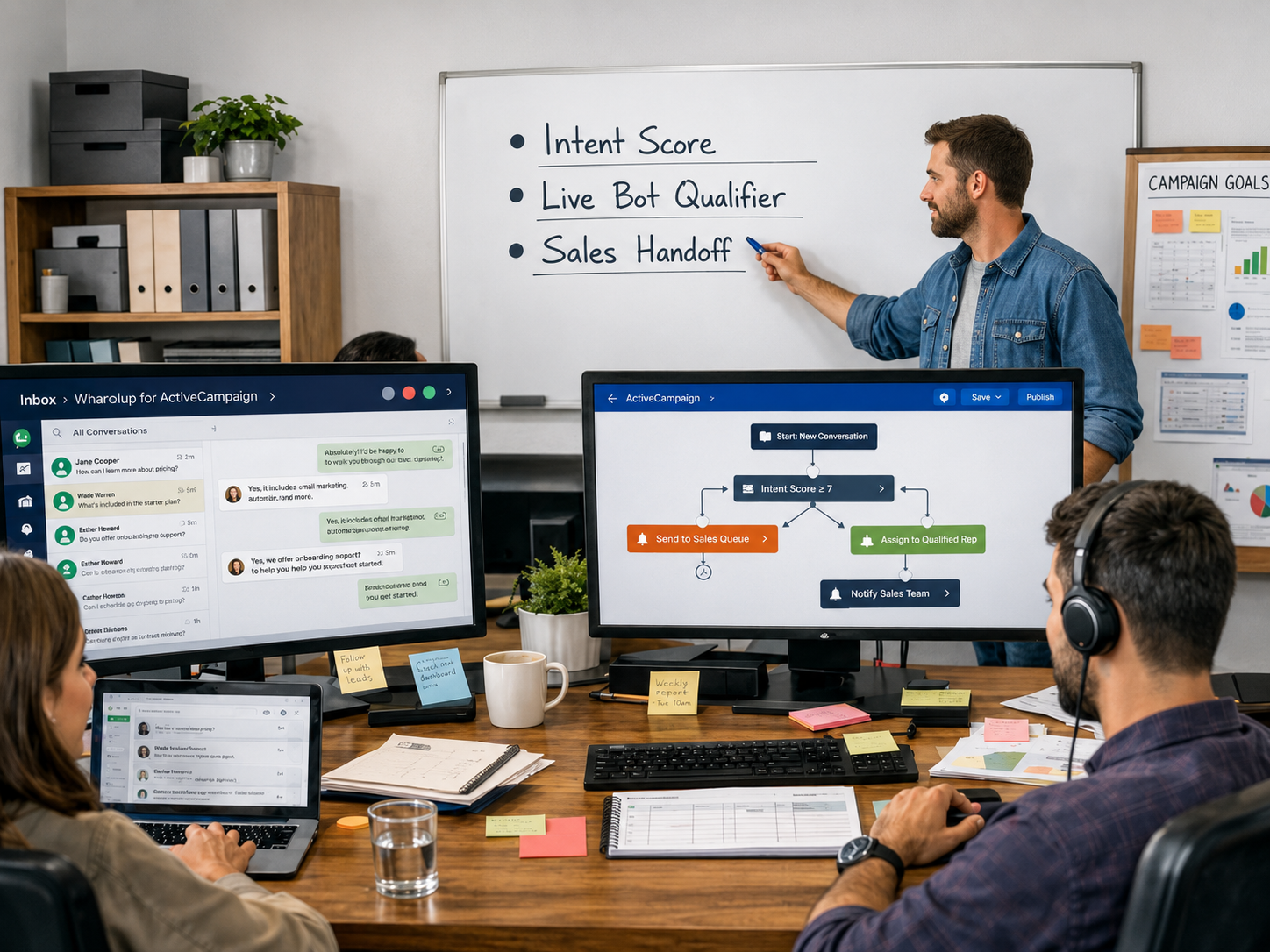
Email automation used to mean setting sequences and waiting. That still works, but buyers move faster now. When conversations happen outside the inbox, timing changes. Pairing Hilos with ActiveCampaign opens responses in real time, not hours later.
Below, we’ll walk through how Hilos plus ActiveCampaign compares to email-only setups, where inbox rules fall short, and why WhatsApp conversations catch intent earlier. Once you see the difference in speed and context, automation feels more useful.
What Hilos Adds on Top of ActiveCampaign
Hilos adds a real conversation layer on top of ActiveCampaign, bringing WhatsApp into the same system that already handles email marketing and CRM data. But instead of waiting on inbox replies, teams can interact in real time, capture intent early, and keep every action connected to existing automation.
Email automation stays useful for planning messages. Yet Hilos changes what happens between sends. It listens during live chats, saves answers as data, and updates contact records in real time, so automation reacts to what people say, not what they clicked yesterday.
With Hilos, WhatsApp flows can qualify leads, answer questions, and hand conversations to sales at the right moment. Everything stays synced inside ActiveCampaign, meaning tags, scores, and pipelines update in real time as conversations move forward without manual work from teams.
This setup reduces missed leads and awkward follow-ups because WhatsApp opens fast and feels familiar. Besides, teams see full conversation history, know when to step in, and let automation handle repetitive questions while humans focus on closing more deals.
How Email-Only Automation Setups Typically Work
Email-only automation usually starts with triggers like signups, downloads, or purchases. When someone meets a condition, the system sends a planned message or sequence. This structure reflects common automation challenges explained in discussions of email automation limitations businesses face, where fixed rules rarely adapt on their own.
These setups rely on schedules and waiting periods, often measured in hours or days. Emails go out after delays, hoping the timing still feels right. The system cannot see what happens between messages, only the actions already recorded inside email reports.
Segmentation helps organize contacts into groups based on behavior or tags. Those groups receive different emails, which adds structure and order. However, updates only happen after clicks or opens, so reactions always come later than the moment interest appears during real activity.
Reporting focuses on open rates, clicks, and conversions shown after campaigns finish. Teams review results and adjust future emails based on past performance. Learning depends on review cycles, not live conversations, which slows improvement over time for growing businesses.
The Core Limitation of Inbox-Only Automation
As mentioned before, inbox-only automation struggles most with timing. People open emails when it suits them, not when interest peaks. Research on how businesses are using WhatsApp to engage customers faster shows why messaging channels outperform email when speed and attention matter most.
Email-based systems also miss context. Silence could mean confusion, distraction, or simple timing issues. But automation reads it as disinterest, keeps sending scheduled messages, and slowly turns a warm conversation into something cold and easy to ignore without understanding what actually happened.
Another limit is how data arrives. Email actions show clicks and opens after the fact. Meanwhile, real questions, buying signals, or hesitation live elsewhere, unseen by the system, which keeps reacting to yesterday instead of what matters now during active conversations with real people.
Inbox-only automation also depends on patience from buyers. People expect faster replies in messaging apps. But email forces waiting, follow-ups, and gaps, which creates friction and lets stronger competitors step in first before interest fades and decisions move elsewhere.
Conversations vs Campaigns: A Shift in Automation Logic
Campaigns follow a plan built ahead of time, with messages sent in a fixed order. Conversations work differently, reacting to what someone says right now. Still, automation shifts from pushing content to listening, responding, and adjusting in real time as intent appears.
Email campaigns measure success after sends, using opens and clicks to judge interest. Conversations show intent as it forms, through questions and replies. But automation can change paths instantly, choosing next actions based on what people actually say in that moment.
This shift changes how teams think about automation logic. Instead of building long schedules, they design flexible paths that react to answers. Control stays clear, because rules guide when bots speak and when humans step in to help customers effectively.
Conversations also match how people communicate on WhatsApp, fast and informal. Campaigns feel slower there, even when messages are relevant. Real-time replies reduce friction, keep momentum alive, and let automation support sales without breaking the flow of discussion for everyone involved.
Personalization Beyond Subject Lines and Segments
Email personalization often stops at names, subject lines, and broad segments built from past behavior. That approach feels polite, not personal. Real personalization listens during conversations, captures answers in the moment, and adapts messages while interest is fresh there.
With Hilos and ActiveCampaign, personalization uses live inputs like questions asked, choices made, and timing of replies. This approach aligns with insights shared in what the Hilos acquisition means for ActiveCampaign users, where conversations directly shape automation instead of relying on delayed email behavior.
Instead of guessing interests, conversations reveal intent through simple answers and follow-up questions. Personalization can change content, pacing, and next steps immediately, matching how people think and decide as the exchange unfolds without forcing rigid predefined paths everywhere.
This depth goes beyond segments built once and reused forever. Each interaction becomes a signal, helping teams respond with clarity and care, whether automation continues or a human joins to move things forward at exactly the right moment today.
Automation That Feels Less Robotic and More Human
Robotic automation stands out when messages repeat on a schedule and ignore what just happened. Human-feeling automation reacts, slows down, and answers in a way that makes sense. With WhatsApp conversations, responses happen in real time, questions get acknowledged, and exchanges feel more natural instead of forced.
With Hilos connected to ActiveCampaign, automation listens before acting. Messages can adjust based on replies, timing, and intent. Yet teams keep control, deciding when automation speaks and when a real person steps in. The connection behind that is simple, like mapping contact fields so data stays clean.

This approach avoids the spammy feeling of endless follow-ups. Automation can wait, answer simple questions, or stop when needed. This way, people feel heard, because responses match what they actually said, not what a rule expected earlier during real conversations.
Human-sounding automation also respects pacing. Sales teams step in only when timing feels right. Though technology runs the background work, customers experience a smooth exchange that feels helpful, calm, and surprisingly personal from start to finish without extra effort.
When Email-Only Setups Still Make Sense
Email-only setups still work well for simple needs like newsletters, updates, or announcements sent on a steady schedule. But when goals focus on informing rather than responding, inbox messages remain clear, familiar, and easy to manage for small teams.
They also make sense when audiences expect slower communication, such as monthly reports or educational content read over time. Yet email fits habits people already have, requiring no new channels, training, or behavior changes from subscribers in many cases today.
For businesses with limited sales interaction, email automation offers predictable structure and reporting. Teams can plan campaigns ahead, review results later, and improve gradually without needing constant monitoring or live responses during busy days for most routine marketing efforts.
Email-only setups also suit early-stage projects where simplicity matters more than speed. Though as needs grow, limits appear, email remains a reasonable starting point when conversations are minimal and resources stay tight for teams learning automation basics first.
Final Thoughts: Choosing the Right Automation Model for Growth
Email-only automation still has value, but its limits show as buyer behavior shifts toward faster conversations. Hilos with ActiveCampaign adds context and dialogue, helping teams respond, personalize, and keep automation aligned with how people communicate.
And that shift changes how automation fits into everyday work. Instead of pushing messages on a schedule, it supports real conversations as they happen, helping teams stay responsive, coordinated, and ready to grow as customer expectations keep moving.
Share this post with your friends

Ross Jenkins
Ross Jenkins is the founder of DigitalME and is an ActiveCampaign Certified Consultant. He is ranked #1 on UpWork for his proficiency in digital marketing. DigitalME offers targeted digital solutions and is perfect for anyone who wants to increase leads, sales, and productivity through automation.